
Heating
Heat Pump vs Gas Furnace in Texas: Natural Gas, Propane and All-Electric Homes Near Azle
By Geaux 72 Air & Heat 6 min read
The short answer
Near Azle, the fuel at the property line usually decides it. On Atmos natural gas, a gas furnace or a dual-fuel heat pump both work. On propane acreage, a heat pump with the propane furnace as backup cuts tank refills. In an all-electric house on heat strips, a heat pump is the biggest efficiency upgrade. Backup heat covers hard freezes.
Start With the Fuel You Already Have
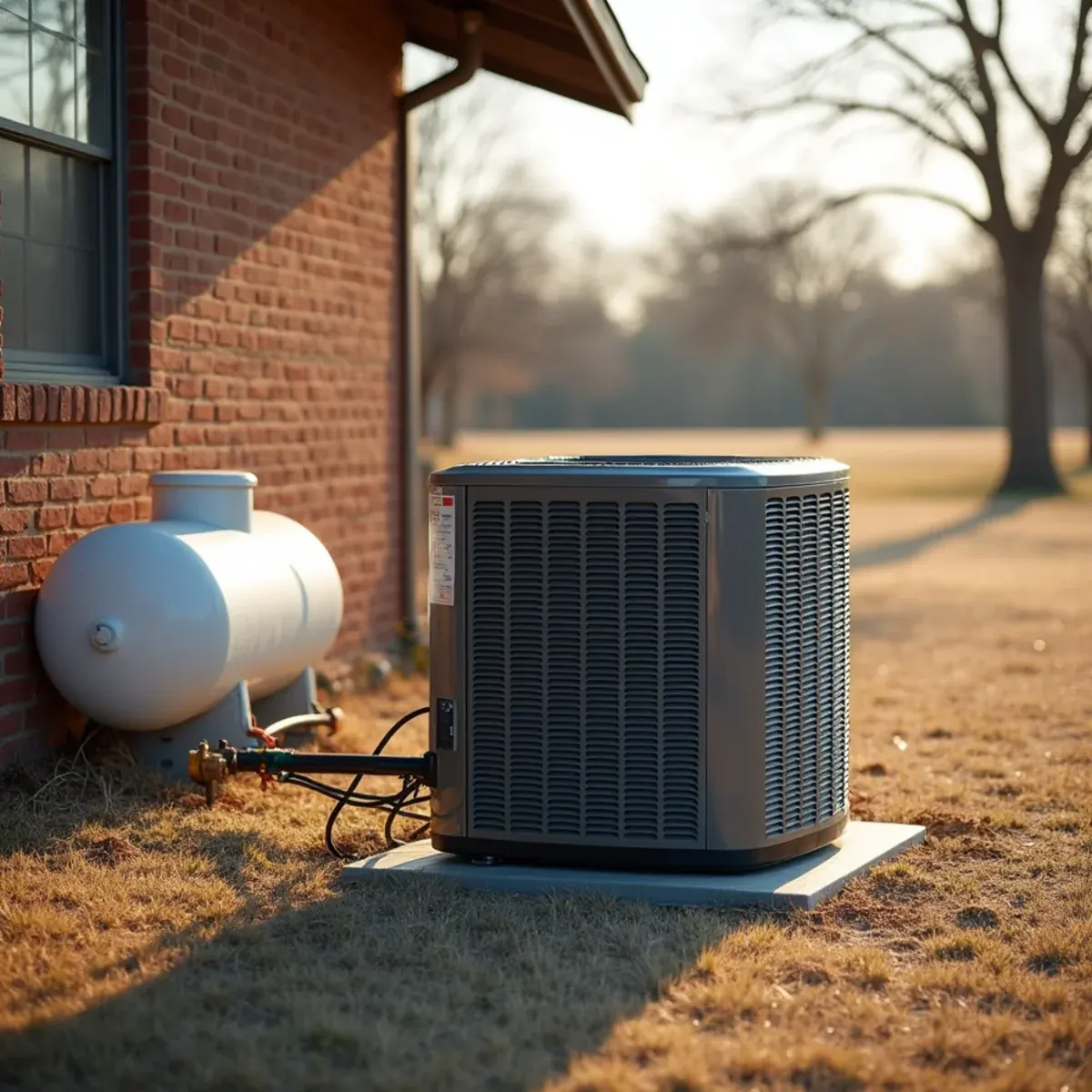
Heating around Azle splits along the gas mains. In town, Atmos Energy supplies natural gas, and most 1960s to 1990s houses have a gas furnace in a hall closet or the attic. Past the mains, toward Springtown, Reno and the acreage off FM 730, homes run propane, a heat pump, or an all-electric air handler with heat strips, some on Tri-County Electric Cooperative lines.
Changing fuel is the expensive part, so the fuel you have sets the starting point.
Natural Gas Furnaces
A gas furnace burns fuel inside a heat exchanger and blows noticeably warm air. Gas is piped in, needs no delivery schedule, and has generally been a lower-cost heat source in North Texas. In a mild winter a furnace runs fewer hours, so a well-kept one often lasts 15 to 20 years or more.
The trade-off is combustion. Gas appliances need proper venting, a carbon monoxide alarm near the bedrooms, and a yearly check of the flame sensor, hot-surface igniter, inducer motor and heat exchanger, all part of furnace and heating repair.
If you smell gas or a carbon monoxide alarm sounds, leave the house first. From outside, call Atmos Energy (or your propane supplier) and 911. Don't flip switches, light anything or go looking for the leak.
Propane Furnaces on Rural Properties
A propane furnace works like a gas furnace, with the valve and burner orifices set up for propane. The difference is supply. Propane arrives by truck to a leased or owned tank, and the price per gallon can swing with the season, often rising when a cold snap pushes demand up. A delivery in the middle of a freeze can be hard to get.
That's why many rural owners pair propane with a heat pump. The heat pump handles the mild days, which are most of a North Texas winter, and the furnace takes over when it turns truly cold.
All-Electric Homes: Heat Strips or a Heat Pump
Many all-electric houses and manufactured homes heat with an electric furnace or an air handler with heat strips. Strips are resistance heaters: cheap to install, but one of the costliest ways to run heat, because every bit of warmth comes straight off the meter.
A heat pump moves heat instead of making it, pulling warmth from outdoor air and carrying it inside. On most winter days it delivers more heat than the electricity it uses. For a home on strips, it's usually the largest single cut to the winter electric bill, and the strips stay as auxiliary heat.
How Heat Pumps Handle a North Texas Winter
A heat pump's output drops as temperatures fall, but a DFW-area winter spends most of its hours above freezing, where heat pumps work well.
- Defrost: in cold, damp weather, frost builds on the outdoor coil. The unit reverses for a few minutes to melt it, and you may see steam and hear the reversing valve shift. That's normal.
- Auxiliary heat: when the heat pump can't keep up, the strips (or a furnace in a dual-fuel setup) come on. "Aux" on a cold morning is expected.
- Hard freezes: in February 2021, temperatures around Fort Worth fell into the single digits and below zero at DFW Airport, and heat pumps leaned on backup heat for days. That's the case for dependable backup heat, and for dual fuel where gas or propane is available.
If a heat pump blows cool for long stretches, stays iced, or runs aux heat on a mild afternoon, heat pump repair and installation covers the usual faults.
Dual Fuel: Heat Pump Plus a Gas or Propane Furnace
Dual fuel pairs a heat pump with a gas or propane furnace instead of strips. Below an outdoor temperature the installer sets from equipment capacity and fuel costs, the controls switch to the furnace. The trade-off is a higher first cost and two heat sources to maintain. For propane homes, it's the option most worth pricing.
Which Lasts Longer, and Which Needs More Upkeep?
Lifespan
A gas or propane furnace in North Texas works only a few months a year, and a well-kept one often runs 15 to 20 years or more. A heat pump is the air conditioner and the heater in one machine, so its compressor and outdoor fan run nearly year-round here; 10 to 15 years is a fair expectation. That is not a reason to avoid one, but it belongs in the math: a furnace paired with an AC means two machines aging at different speeds, while a heat pump means one machine doing both jobs.
Maintenance and safety
A heat pump benefits from two visits a year, one before cooling season and one before heating season, because it is working in both. A furnace needs its yearly heating check focused on combustion: burners, flame sensor, the heat exchanger and the flue that carries exhaust outside. Heat pumps burn nothing, so they add no carbon monoxide risk of their own; a home with a gas or propane furnace, water heater or range still needs working CO alarms near the bedrooms either way.
Side-by-Side Comparison
| Option | Supply | Running cost | In a hard freeze | Usual fit |
|---|---|---|---|---|
| Natural gas furnace | Atmos Energy, piped in | Generally low | Strong; blower still needs power | In-town homes with gas |
| Propane furnace | Tank delivery | Swings with propane prices | Strong while the tank has fuel | Rural acreage past the mains |
| Electric furnace or heat strips | Electric meter | Highest of the group | Steady, heavy electric draw | Low first cost only |
| Heat pump with strips | Electric meter | Low on mild days | Leans on strips | All-electric and manufactured homes |
| Dual fuel | Electric plus gas or propane | Low most of the winter | Strong; furnace takes over | Gas or propane homes |
How to Decide
- 1Start with the fuel on the property: piped gas, propane or electric only.
- 2Check the age of both halves. If the AC and furnace are both old, a heat pump or dual fuel replaces both in one project.
- 3Confirm the electrical service can carry a heat pump and backup strips.
- 4Look at the ducts. Heat pump air is cooler, so leaky attic ducts hurt it more.
- 5Plan for the freeze, and get a load calculation and written quotes for two options.
For homes around Springtown and the acreage outside Weatherford, propane-plus-heat-pump and all-electric heat pump setups are the two we're asked about most. In town, it's usually gas furnace or dual fuel. Every HVAC contractor we send is licensed and insured in Texas.
The Bottom Line for Homes Near Azle
Let the fuel you already have make the first cut, then weigh comfort, run cost and how long you plan to stay. In town on gas, a furnace is simple and long-lived, and dual fuel adds efficiency. On propane acreage around Springtown and Weatherford, a heat pump with the furnace as backup is usually the strongest setup. In an all-electric house, replacing heat strips with a heat pump is the upgrade that pays. Ask for a load calculation either way, and see heat pump repair and installation or furnace and heating repair when you are ready to talk it through: call (321) 478-0693.
From the job site
What we hear from propane and all-electric homes
After a cold January, calls from rural homes near Springtown and Weatherford follow a pattern: a propane bill that doubled, or an all-electric house whose bill jumped because the heat strips ran for days. Often the heat pump had quietly failed and the strips were doing all the work. "Aux" showing on a 45°F afternoon is worth a service call.
In town, gas furnaces in 1970s and 1980s Azle homes are often still running while the AC beside them is on its second or third replacement. When the AC goes, that's the moment to price a heat pump or dual fuel, because the old furnace may not be far behind.
- Ask the installer at what outdoor temperature the system switches to backup heat.
- Put CO alarms near the bedrooms in any home with a gas or propane appliance.
Related questions
Does a heat pump work in North Texas winters?
Is a heat pump cheaper to run than a propane furnace?
Does dual fuel make sense for a propane home in Parker County?
Why does my heat pump blow cooler air than a furnace?
How long does a heat pump last compared with a furnace in Texas?
Written by the Geaux 72 Air & Heat team for homeowners in Azle and nearby communities. General information, not a diagnosis or engineering advice: leave refrigerant, electrical and gas work to a licensed HVAC technician, who has the final word on your system. Every HVAC contractor we send is licensed and insured in Texas. Last reviewed October 2026.